

yeah sheet rock is about 6 bucks and tax. That's not what I care about, I'm not ripping down an exterior wall, because then the cost goes up with reinsulating it after cleaning up all the loose fiberglass insulation that will get everywhere.

You are using an out of date browser. It may not display this or other websites correctly.
You should upgrade or use an alternative browser.
You should upgrade or use an alternative browser.
Sometimes...
- Thread starter TheOriginalJames
- Start date


Why can't you do an interior wall .. that is whats confusing me .. why are you so concerned with putting this through an exterior wall? Most walls, even mortored, aren't just open to the exterior of a house. Unless you live in a log cabin lol, which I know you don't. I know your house is old, but come on .. it isn't that old lol.
There is usually some sort of partition/vapor barrier between them. Otherwise cold/water would just seep through.
There is usually some sort of partition/vapor barrier between them. Otherwise cold/water would just seep through.
Why can't you do an interior wall .. that is whats confusing me .. why are you so concerned with putting this through an exterior wall? Most walls, even mortored, aren't just open to the exterior of a house. Unless you live in a log cabin lol, which I know you don't. I know your house is old, but come on .. it isn't that old lol.
There is usually some sort of partition/vapor barrier between them. Otherwise cold/water would just seep through.
Because the two outlets I have ARE on my interior walls, I have no outlets on my exterior walls where I could use them also. This house was built in 1927.
Your exterior wall shoudl be at least 8" thick, still .. and the extreme exterior should have a partition sepertating it from your interior walls (that are located on your extrieor side walls). That is what I'm talking about.
If you take down an interior wall (that is on an exterior facing wall) .. you aren't going to be able to see through to the backside of your exterior facing (brick, wood, siding, ect). There should be a divider/partition/barrier there.
Also .. if you aren't on a slab .. and have a crawl space .. just put in a floor duplex close to the basebaord on the other side of the room.
I actually prefer a floor duplex myself, especially if you have hardwoods.
If you take down an interior wall (that is on an exterior facing wall) .. you aren't going to be able to see through to the backside of your exterior facing (brick, wood, siding, ect). There should be a divider/partition/barrier there.
Also .. if you aren't on a slab .. and have a crawl space .. just put in a floor duplex close to the basebaord on the other side of the room.
I actually prefer a floor duplex myself, especially if you have hardwoods.

but james house was built before electricity came out, remember? lol.
Your exterior wall shoudl be at least 8" thick, still .. and the extreme exterior should have a partition sepertating it from your interior walls (that are located on your extrieor side walls). That is what I'm talking about.
If you take down an interior wall (that is on an exterior facing wall) .. you aren't going to be able to see through to the backside of your exterior facing (brick, wood, siding, ect). There should be a divider/partition/barrier there.
Also .. if you aren't on a slab .. and have a crawl space .. just put in a floor duplex close to the basebaord on the other side of the room.
I actually prefer a floor duplex myself, especially if you have hardwoods.
Those building codes weren't around in 1927.
My house has siding, brick, insulation, interior wall.


james, i agree with you. our old house was built 100 yrs ago and we have no outlets on outside walls and had no way of putting any in. it sucked
and floor duplex's aren't an option either?Those building codes weren't around in 1927.
My house has siding, brick, insulation, interior wall.
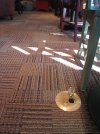
and floor duplex's aren't an option either?
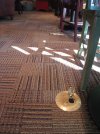
Nope, real hardwood = not getting replaced.
Basically I'm fucked on outlets in the room.
simplest and cheapest solution:

lol .. i would die if I had to run that across my floor LOL


I'm pretty sure the house i live in was built in the 1800s. We just had all of our walls gutted and had the house rewired. I know where your comin from.


Actually running wires in this type of house are much easier to do from the basement up. My friend had the exact same problem with her house, plaster and lath walls, no access from the attic to the exterior walls and it was balloon framed with fire cat blocking every few feet horizontally.
But with all these obstacles, we were able to rewire her entire house. We replaced the knob and tube cloth sheathed wires with romex. We were able to put outlets every 6 feet (as per code) with grounded outlets. We did all this with just a few well placed 6"X6" access holes which are quite easy to patch later with Stucto lite and plaster (to avoid sheetrock patches in plaster/lath walls)
You just have to be willing to make a few holes and pull the wires up two stories...
But it isn't impossible... hell, it really isn't even that hard. You just need to know how to work in older homes. That's all we have around here, and after 15 years of remodel/renovation work, I have seen just about every trick in the book.
Hell, if you don't want to patch holes in the walls, you can always carefully remove a few pieces of baseboard, make your chase holes there, then replace the baseboard to cover the holes. There are more than one way to skin a cat.
But with all these obstacles, we were able to rewire her entire house. We replaced the knob and tube cloth sheathed wires with romex. We were able to put outlets every 6 feet (as per code) with grounded outlets. We did all this with just a few well placed 6"X6" access holes which are quite easy to patch later with Stucto lite and plaster (to avoid sheetrock patches in plaster/lath walls)
You just have to be willing to make a few holes and pull the wires up two stories...
But it isn't impossible... hell, it really isn't even that hard. You just need to know how to work in older homes. That's all we have around here, and after 15 years of remodel/renovation work, I have seen just about every trick in the book.
Hell, if you don't want to patch holes in the walls, you can always carefully remove a few pieces of baseboard, make your chase holes there, then replace the baseboard to cover the holes. There are more than one way to skin a cat.
You did that on the exterior walls?
You did that on the exterior walls?
Every wall.... Insulation made it a pain in the ass, but every wall had the old electric ripped out and replaced with romex... outlets every 6'
We also replaced all the galvanized water lines and cast iron waste pipes with new copper and PVC.
Every wall.... Insulation made it a pain in the ass, but every wall had the old electric ripped out and replaced with romex... outlets every 6'
We also replaced all the galvanized water lines and cast iron waste pipes with new copper and PVC.
ah.. well see there's the difference. I have nothing to rip out, and thus no pre-existing paths between the floors for them. I'd have to put in new holes.


lol, last house I lived in was 150 years old, this one is only 90
ah.. well see there's the difference. I have nothing to rip out, and thus no pre-existing paths between the floors for them. I'd have to put in new holes.
Not a single existing hole was used. The holes used for knob and tube were drilled at 3/8" and were clogged up with several inches of base coat that collected at the bottom of the stud cavity (the plaster that got squeezed through the lath during application) This alone kept me from using the same hole....